
Reporting Corporate Income Tax in Tanzania
TRA imposes corporate income tax on resident and non-resident companies. If you are a resident company, the government expects you to report overall corporate income taxes. This entails the earnings you have gathered in Tanzania, digital markets, or outside the country.
On the other hand, a non-resident company should only file taxes on the income it generates from running its operations in Tanzania. This post clarifies how CIT works in Tanzania.
Corporate Income Tax Rate in Tanzania
The TRA’s base corporate income tax (CIT) rate is thirty per cent of taxable revenue for your resident or non-resident company. This rate includes your taxable profits and the capital gains your company raises via the sale of stock or assets.
However, the Tanzanian government often lowers the CIT rate for specific investors to encourage them to start projects in the country. Here are a few exemptions from the 30% CIT rate:
- New Companies Listing on DSE – If a new company lists its stock on the Dar es Salaam Stock Exchange, the government will impose a CIT rate of 25% for three years in a row. Thus, the company will save 5% of its taxable income for three consecutive years.
- Vehicle Assemblers and New Manufacturers – The Tanzanian taxman lowers the corporate income tax for new vehicle assemblers by 20% for a period of 5 years. That is, new companies that assemble vehicles, boats, and tractors will only pay a 10% CIT for five years. Further, entry-level manufacturers in the leather or drug (pharmaceutical) industries holding a government performance agreement pay 10% less in CIT. Their CIT rate is, therefore, 20% for the first sixty months (5 years). After that, the government starts to charge a 30% CIT.
- EPZs– Tanzania is a promoter of domestic industrial development. Thus, Export Processing Zones (EPZs) or Special Economic Zones that export eighty per cent of their products pay zero per cent corporate income tax for a decade. The government will only start imposing the 30% CIT after the 10th year.
Any company not within the three categories above pays a standard corporate income tax rate of 30%. That includes foreign companies with permanent branches in Tanzania. The government could have these foreign branches file a remittance tax at a rate of 10%.
Taxable Income – Deductibles and Non-deductibles
Taxable income is the gross profits you get from every business activity you do without allowable deductions. Therefore, it includes your business income and any proceeds you’ve made from passive investments.
Allowable deductions are typical business expenditures your business incurs when trying to generate a taxable income. Examples include office rent, electricity bills, wages and salaries, cost of raw materials, and office administrative overheads. Moreover, Tanzania has a tax depreciation system that classifies assets.
Some of these classes enjoy an accelerated depreciation rate because the government wants to boost investment. For instance, farm machinery used for agriculture gets a hundred per cent allowance in the first year. The write-off rate for buildings annually is 5%.
A non-deductible expense is any expenditure without fiscal receipts as per the Finance Act 2024’s enforcement. Examples are penalties or fines. As for charitable donations, they only become deductible up to a given limit if meant for approved institutions.
Interest on debt is non-deductible for certain foreign persons. The accepted debt-to-equity ratio in Tanzania is 7:3. If a Tanzanian branch gets heavy funding from its foreign headquarters via debt that is four times its equity, a percentage of interest is non-deductible.
A debt of this magnitude exceeds the standard 7:3 debt-to-equity ratio. Note that dividends are exempt from further CIT if received from resident companies.
Summary
The Tanzanian government, through TRA, imposes a corporate income tax rate of 30%. Most companies deduct this from their taxable income while considering allowable deductions and non-deductions.
New investors listing on DSE and upcoming manufacturers of sanitary pads, drugs, or leather products enjoy a reduced CIT for a specified period. Manufacturers within the Export processing zones exporting over 80 per cent of their products do not pay CIT for the first ten years.
Companies with continuous unrelieved tax losses for two previous income years and the current year should pay an alternative minimum tax (AMT) at 0.5%. However, they must not be in the health, education, or agriculture sectors.
Random Products
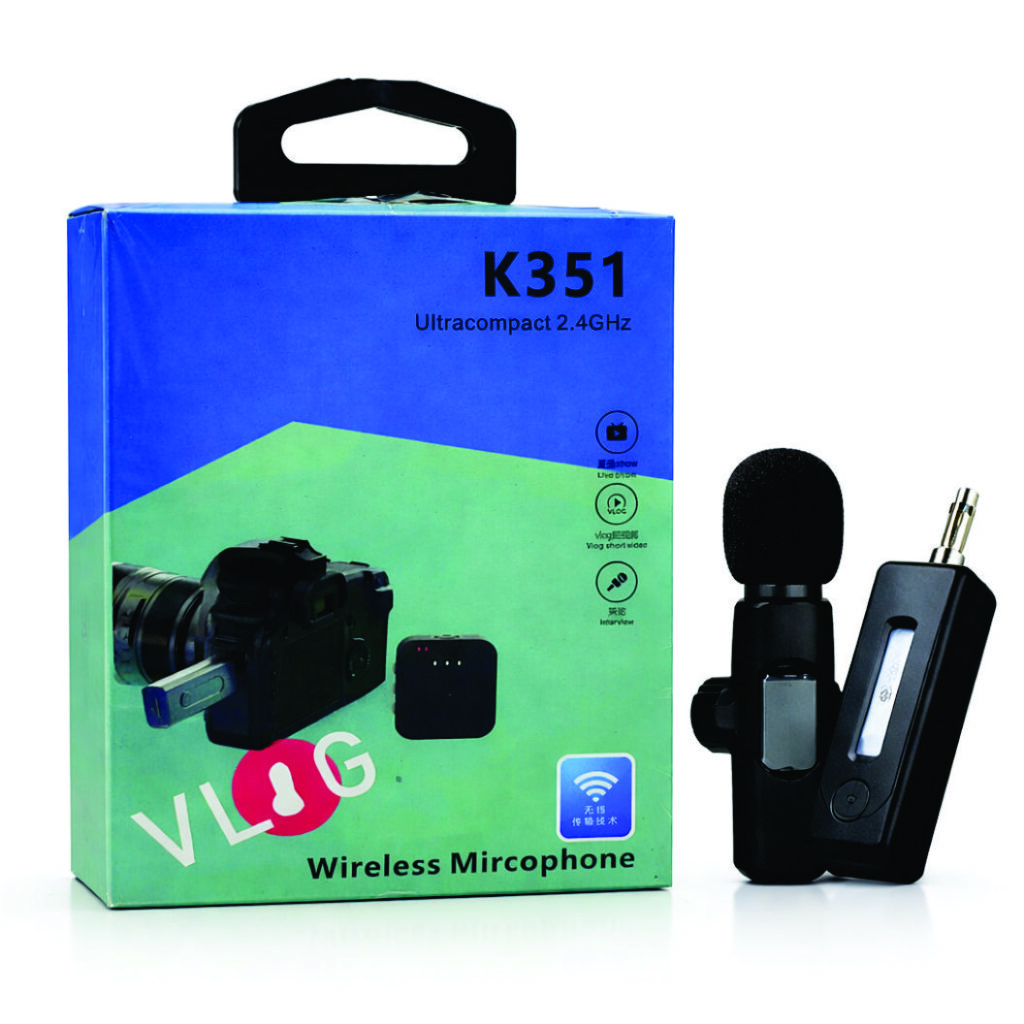
K351 Wireless Microphone – Ultracompact 2.4GHz Lavalier Mic for Vlogging, Interviews & Content Creation
Sh 60,500 Original price was: Sh 60,500.Sh 60,000Current price is: Sh 60,000.